

TL;DR
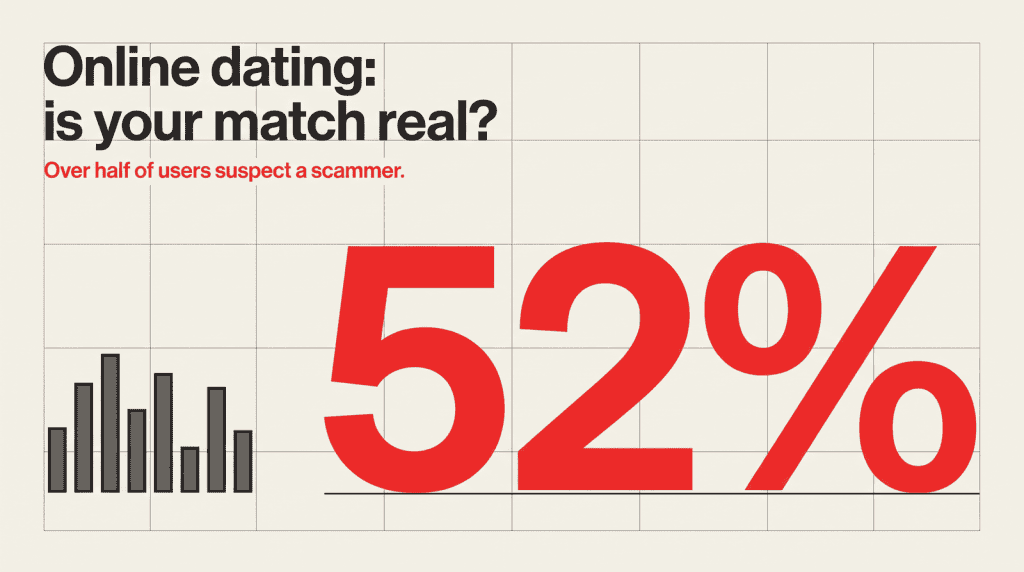
- 52% of US dating app and site users say they have come across someone they believed was trying to scam them.
- 30% of users say someone kept contacting them after they made clear they were not interested.
- The FTC's core warning is a match who pushes to leave the app quickly and then asks for money by wire, gift card or cryptocurrency.
- Two free checks, a reverse image search and a search for the person's job plus "scammer", catch many fake profiles before a first date.
Short version: almost every warning sign appears in the first week of messaging, long before anyone meets, and spotting it takes no technical skill.

Most online dating risk shows up in the first week of messaging, not on the first date. The warning signs are consistent, regulators have written them down, and checking for them costs nothing but a few minutes.
Start with what the sign-up asks for
The first safety decision happens before there is a match. Early-access apps ask you to commit on trust, so look at what is collected and what is promised. HundRoses is a current example. It presents itself as an early-access dating app for singles in Canada and the US, and its sign-up form asks for a first name, last name, email address and country. That is a modest request, and it is the kind of detail worth noticing on any new app. The same page mentions VIP members getting extra benefits and priority access to local matches, so the question to ask of a paid tier is what it changes about who can see you and whom you can see.
Some apps also offer photo or identity verification. Read what the badge actually covers before treating it as proof that a person is who they say they are.
How common the problem is
The Pew Research Center's 2022 survey of US adults found that 30% had used a dating site or app. Among those users, 52% said they had come across someone they thought was trying to scam them, and 30% said someone had continued to contact them after they said they were not interested. These are self-reported impressions rather than confirmed fraud cases, but they describe the ordinary experience of using these services.
| Pew survey, July 2022 | Share |
|---|---|
| Ever used a dating site or app | 30% of US adults |
| Suspected someone was trying to scam them | 52% of users |
| Kept being contacted after saying no | 30% of users |
| Received unsolicited explicit messages or images | 38% of users |
Red flags in the first week
The Federal Trade Commission's guidance on romance scams describes the same pattern again and again. Watch for these:
- A quick push to leave the app for email, calls or another messaging service.
- Frequent, friendly contact that builds trust before a story arrives.
- A reason they can never meet in person, such as working abroad, serving overseas or being stationed on an oil rig.
- A request for money for medical bills, a plane ticket, a visa, legal fees or help starting out in cryptocurrency investing.
- Pressure to pay quickly by wire transfer, gift card, money transfer app or cryptocurrency.
Any one of these deserves a pause. Two together is a reason to stop the conversation.
Two checks that cost nothing
Run a reverse image search on the profile photos. If the picture is tied to a different name or does not match what the person told you, you have your answer. Then search for the person's stated job together with the word "scammer" to see whether others have reported the same story. Tell a friend or family member who they are and where you are meeting, and hold the FTC's one firm rule: never send money or gifts to someone you have not met in person.
If something has already gone wrong
Stop communicating with the person. If you paid by gift card, wire transfer, credit or debit card or cryptocurrency, contact the company or your bank right away and ask for a refund. Report the scam at ReportFraud.ftc.gov and tell the app where you met them. The same habits apply if you meet people through chat services, as this guide to staying safe on free chat lines also covers.
Caution is not cynicism. It is what lets you keep talking to people you cannot yet verify.
