


TL;DR
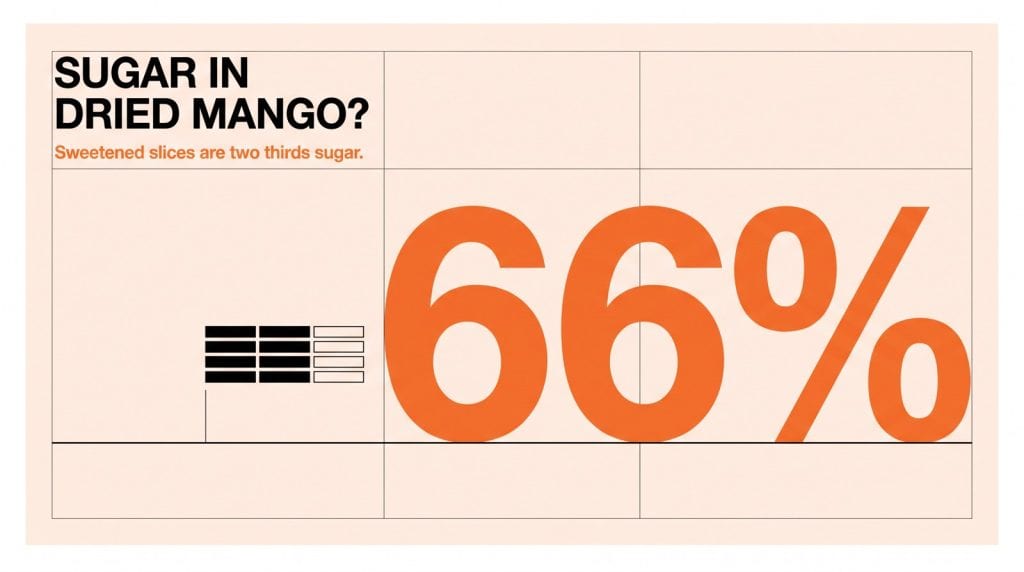
- Sweetened dried mango has about 66 g of sugar per 100 g, roughly two thirds of its weight.
- A 40 g handful is about 26 g of sugar and 128 calories.
- Fiber is only 2.4 g per 100 g, which is small for that many calories.
- The WHO wants free sugars under 10% of your energy, about 50 g on a 2,000 calorie day.
Short version: dried mango is a fine snack by the handful and a poor one by the bag. The ingredient line tells you which kind you bought.
Dried mango can fit into a healthy diet in small portions. The catch is that a normal handful carries more sugar than most people expect, because drying removes the water and keeps everything else. Here are the three myths that trip people up.
Myth 1: it is fruit, so the sugar does not count
Picture a bag of sweet orange slices and a plate of fresh mango side by side. The bag feels like the healthier twin, and the label usually says so. The numbers say something else. USDA data for sweetened dried mango lists about 319 calories, 66.3 g of sugars and 2.4 g of fiber in every 100 g.
Whether that sugar is “added” depends on the product. Qualitex Global, for example, lists its soft dried mango in two versions: one made of 95% mango with 5% sugar and citric acid, and one that is 100% mango. Same fruit, different bag. The only way to know which one you are eating is to read the ingredient line.
It matters because the World Health Organization advises keeping free sugars, which include sugars added by manufacturers, under 10% of your daily energy. On a 2,000 calorie day that is about 50 g. The sweetened kind spends a good part of that budget in one handful.
Myth 2: no added sugar means low sugar
It does not. It means nobody added any. The fruit still carries its own sugar, and drying squeezes it into a much smaller piece. A 100% mango slice is a better choice than a sweetened one, but it is still concentrated.
A simple rule works well here. If you would not eat three whole mangoes in a sitting, do not eat the dried equivalent in one go. The bag makes that easy to forget.
Myth 3: dried is a healthier swap for fresh
Dried mango keeps some real strengths. It travels well, needs no fridge, and one supplier lists a 12-month shelf life. For a hiking bag or a desk drawer, that is hard to beat.
But it is not a like-for-like swap. Fresh fruit fills you up with water and bulk. Dried fruit packs the calories into something you can eat in a minute, which is why a bag disappears so fast. Fiber at 2.4 g per 100 g is small next to 319 calories.
How to eat it without overdoing it
Keep to about 30 to 40 g, which is a small handful. Pair it with nuts or plain yogurt so it does not hit your system alone. Read the ingredients too: mango, and maybe citric acid, is a short list you can trust. A long list with several sugars is a candy that happens to contain fruit.
If you like to browse more everyday food ideas, this piece on why mung beans deserve a place in your diet is a good next read.
So, is dried mango good for you? Yes, in the right amount and in the right form. A small handful of the plain kind is a snack. The whole bag is dessert.

